
A howling wolf on a rock with a big moon behind it is one of those pictures almost everyone wants to draw at some point. The trouble is that a wolf drawn freehand usually ends up looking like a friendly dog. In this lesson I'll show you how to draw a wolf step by step, sitting tall with its head tipped back, so the long muzzle, the fluffy neck ruff and the heavy tail do the work of saying "wolf".
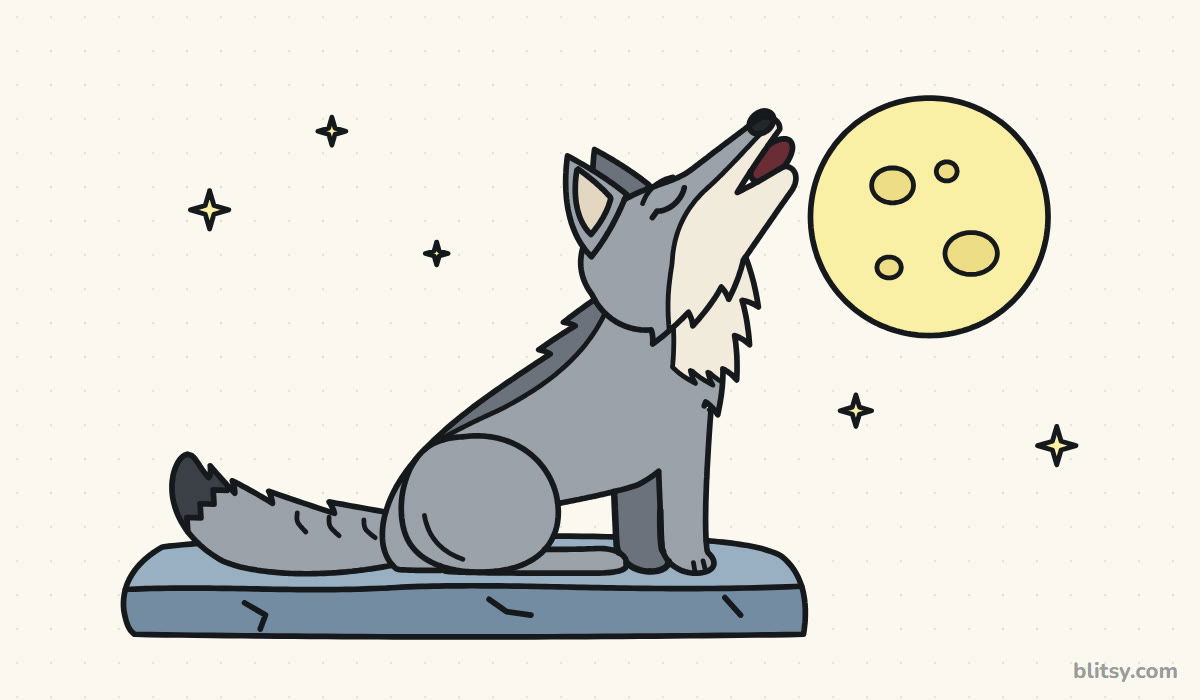
Look for the blue in every picture. The blue lines are the ones you draw in that step, the gray ones came earlier, and the pale blue guide shapes disappear once the drawing is inked.
Quick overview
⏱️ Time: about 45 minutes with coloring
🎯 Level: easy to medium, fine for kids around 8 and up
✏️ Steps: 12
🐺 You'll draw: a sitting gray wolf howling on a rock ledge under a full moon
Supplies for a Moonlit Wolf Sketch
- A regular pencil, kept light for the guide shapes
- An eraser that won't smear
- A black fineliner or thin marker for the final outline
- Colored pencils or markers in gray, dark gray, cream, black, pale yellow, blue gray and dark red
- Plain paper turned sideways, so the moon fits beside the wolf
Two grays help a lot here, one light and one dark, because the darker back is what makes this animal look wild.
How to Draw a Wolf Step by Step
Step 1: Draw the ledge line and three circles
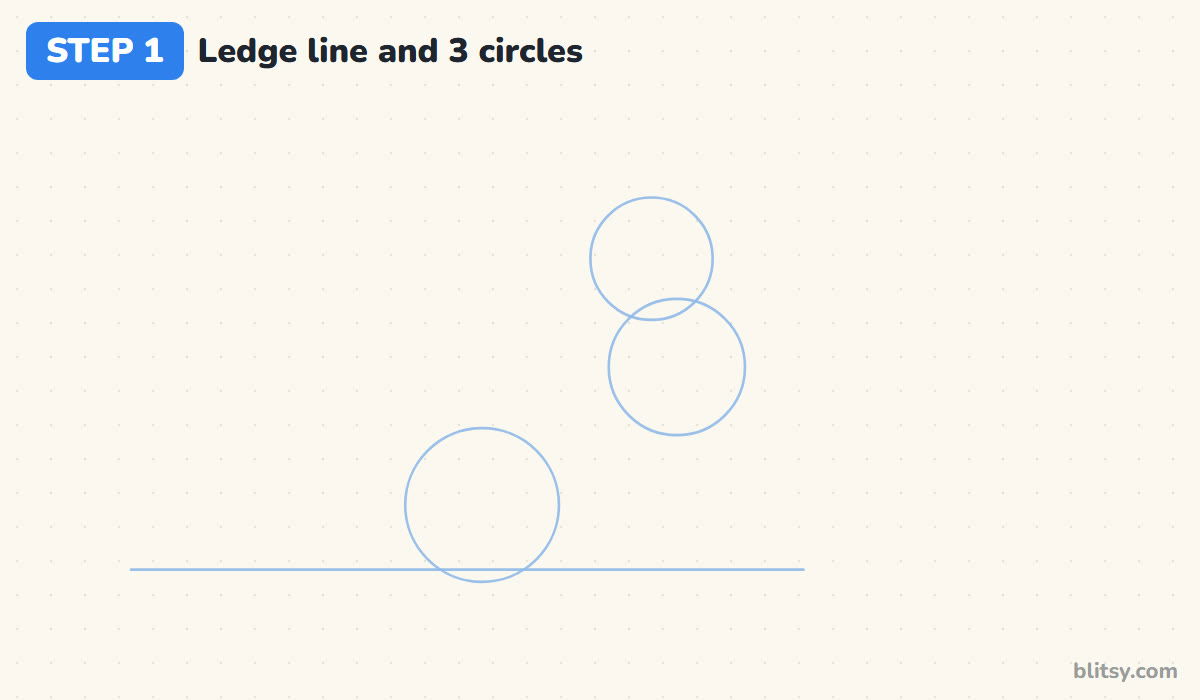
Start with a long flat line near the bottom of the page. Sit a hip circle on the left end of it, then place a slightly smaller chest circle up and to the right, and a head circle right on top of the chest. The head circle overlaps the chest a little.
💡 Tip: Press so lightly that you can barely see the circles. They're only scaffolding.
Step 2: Add the muzzle box and body guides
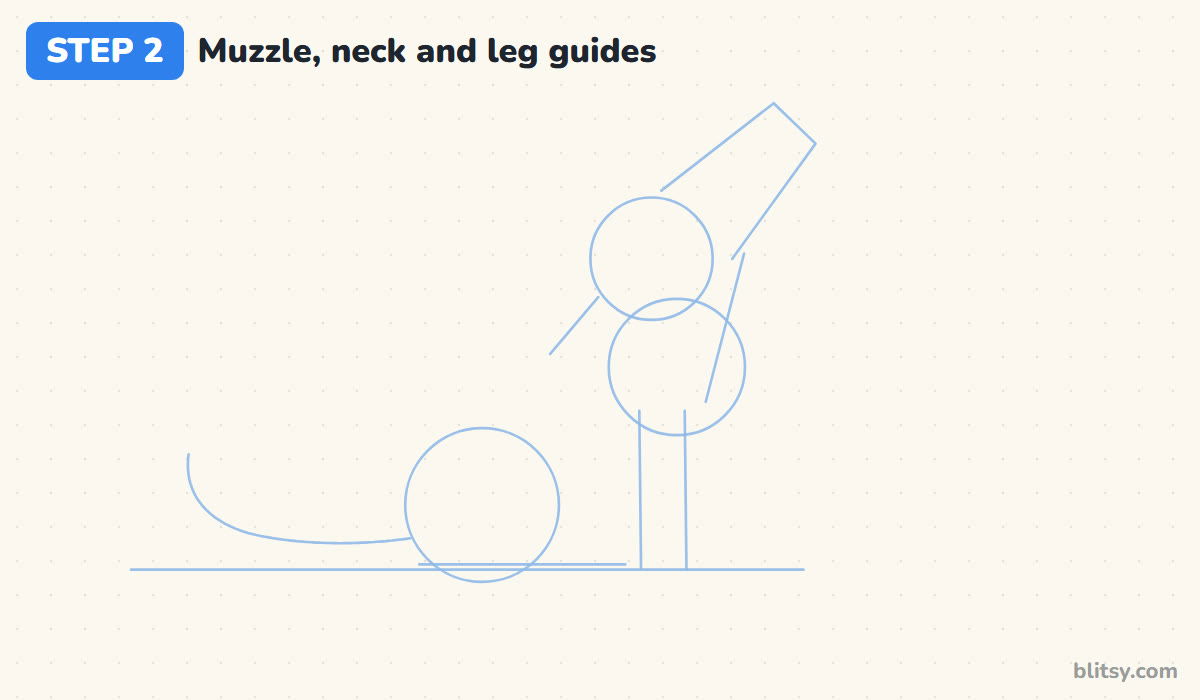
From the head circle, draw a long box pointing up and to the right, at roughly the angle of a clock hand on half past one. This is the muzzle, raised for the howl. Two lines connect head to body: one slanting down the back of the neck, one down the throat. Then add two straight leg lines, a flat line for the hind foot and a curve for the tail.
💡 Tip: Aim the muzzle box at the spot where the moon will go, so the howl has a target.
Step 3: Shape the howling head and ears
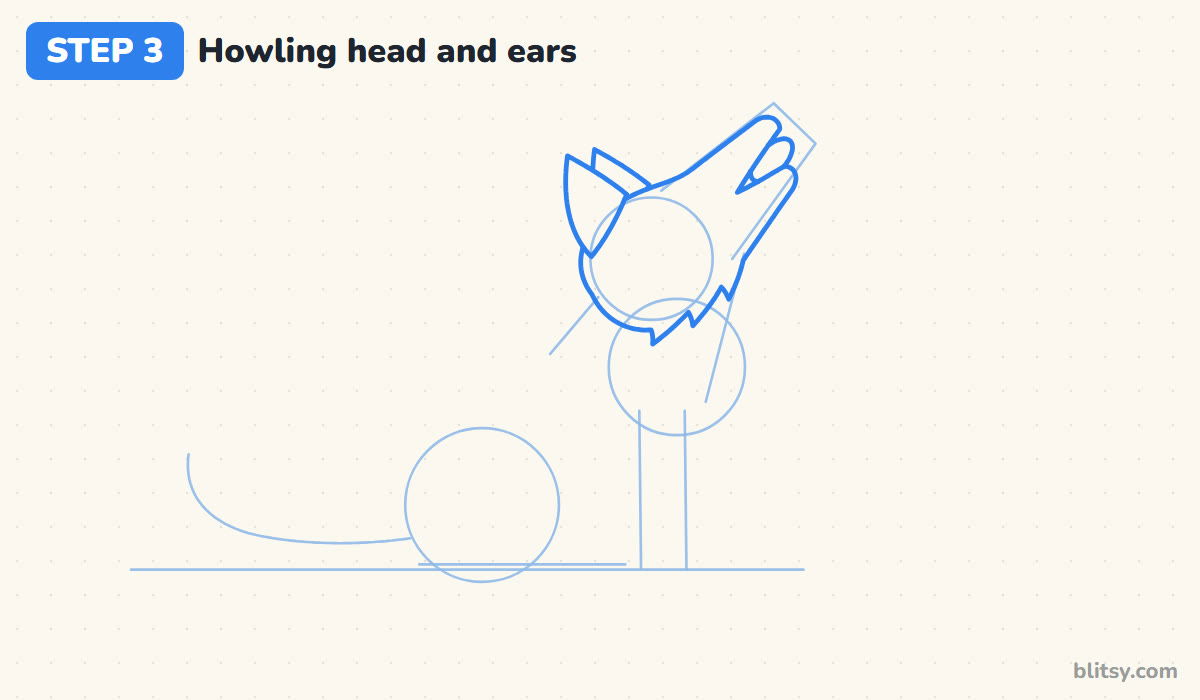
Trace around the head circle and the muzzle box with one line. Near the tip, split it into two jaws with a small gap, and round off the gap so the mouth reads as an open O. Under the head, let three soft points stick out for the cheek fur. Two pointed ears go on top, leaning back toward the tail.




💡 Tip: Wolf ears lean back during a howl. Upright ears make the head look alert, not singing.
Step 4: Outline the furry neck and back
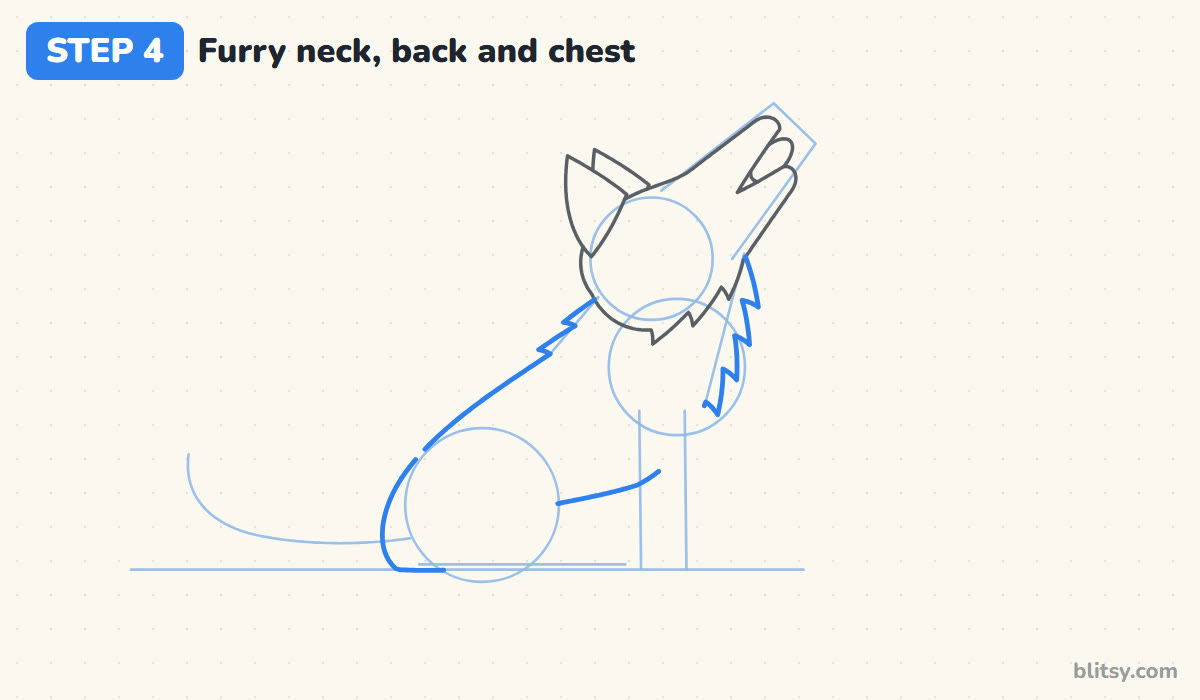
This line gives the wolf its weight. Follow the back-of-neck guide down, adding two little fur spikes, then slope the back down to a round rump that touches the rock. On the front, draw the throat ruff as a column of zigzag tufts pointing down. Stop the back line where the thigh will cover it, and leave the chest open where the front leg joins.
💡 Tip: Make the ruff tufts bigger near the chin and smaller toward the chest.
Step 5: Draw the folded hind leg
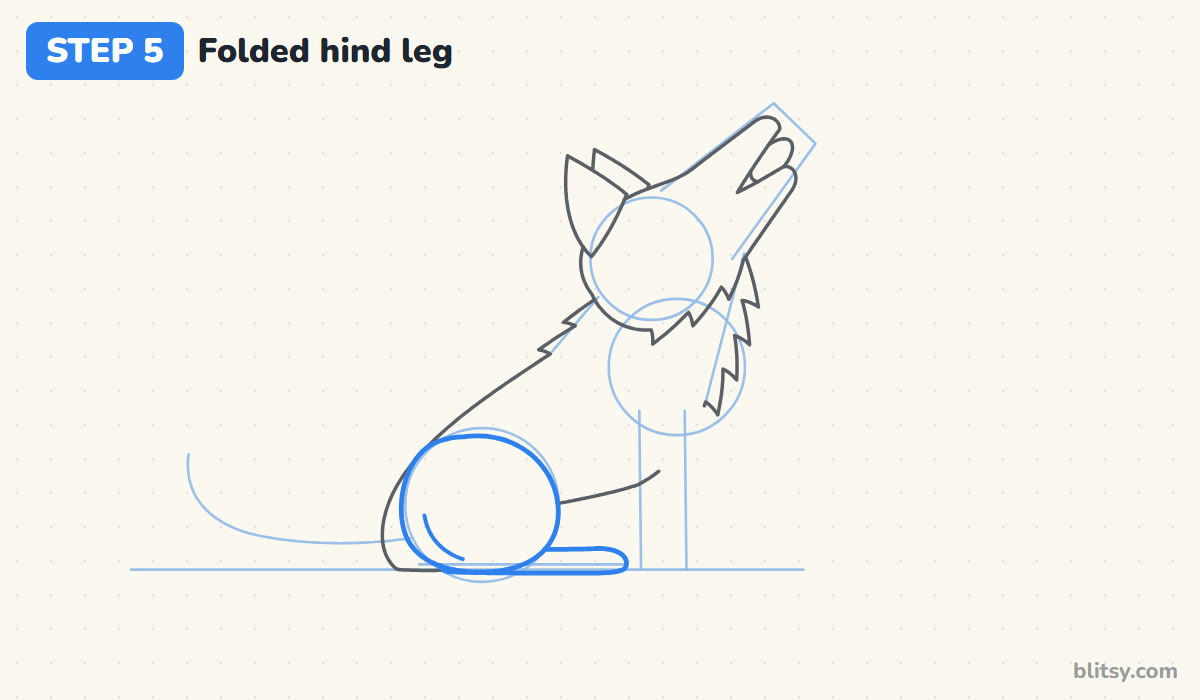
Sitting wolves fold their back legs into a big rounded thigh, so draw a large egg shape over the hip circle, a bit wider at the front. Below it, the hind foot lies flat on the rock and pokes forward like a long slipper. Add one curved line inside the thigh near the bottom.
💡 Tip: Keep the thigh big. A small one makes the wolf look like it's about to tip over.
Step 6: Add the straight front legs
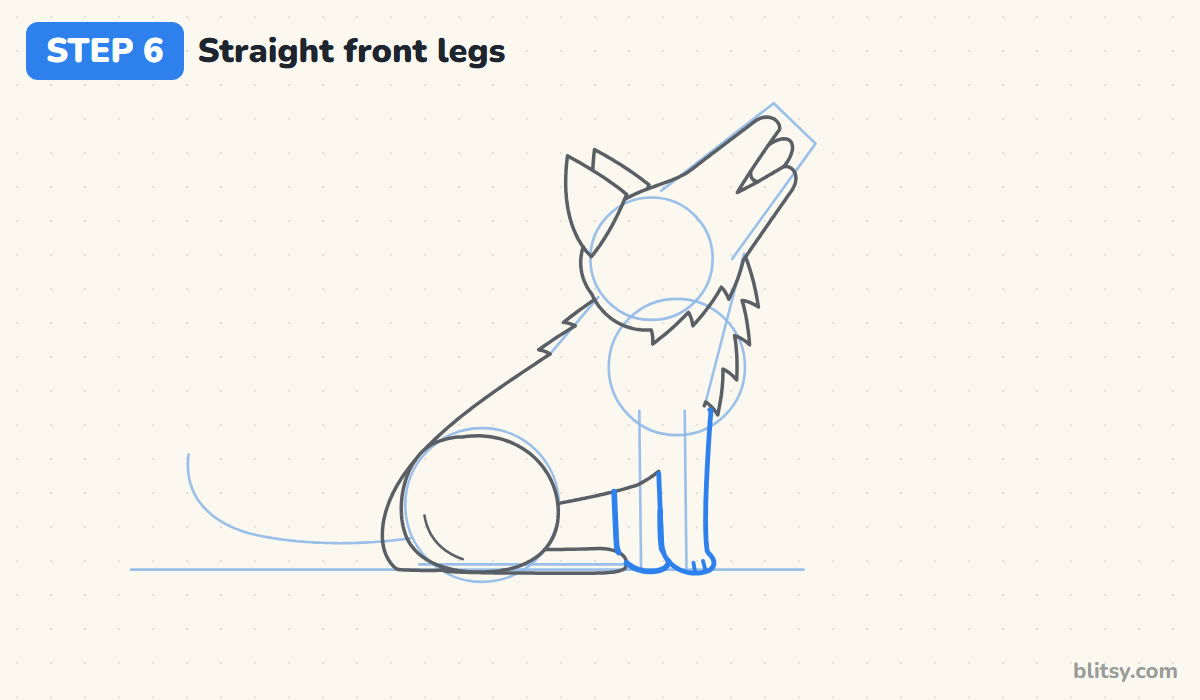
Front legs on a sitting wolf are straight, like two columns holding the chest up. Draw the near leg around its guide, a little wider at the top, ending in a paw with a soft bump at the front. The far leg sits a step behind and only its visible edges get drawn.
💡 Tip: Let the near paw overlap the far one slightly. It instantly says which leg is closer.
Step 7: Draw a bushy tail with a dark tip
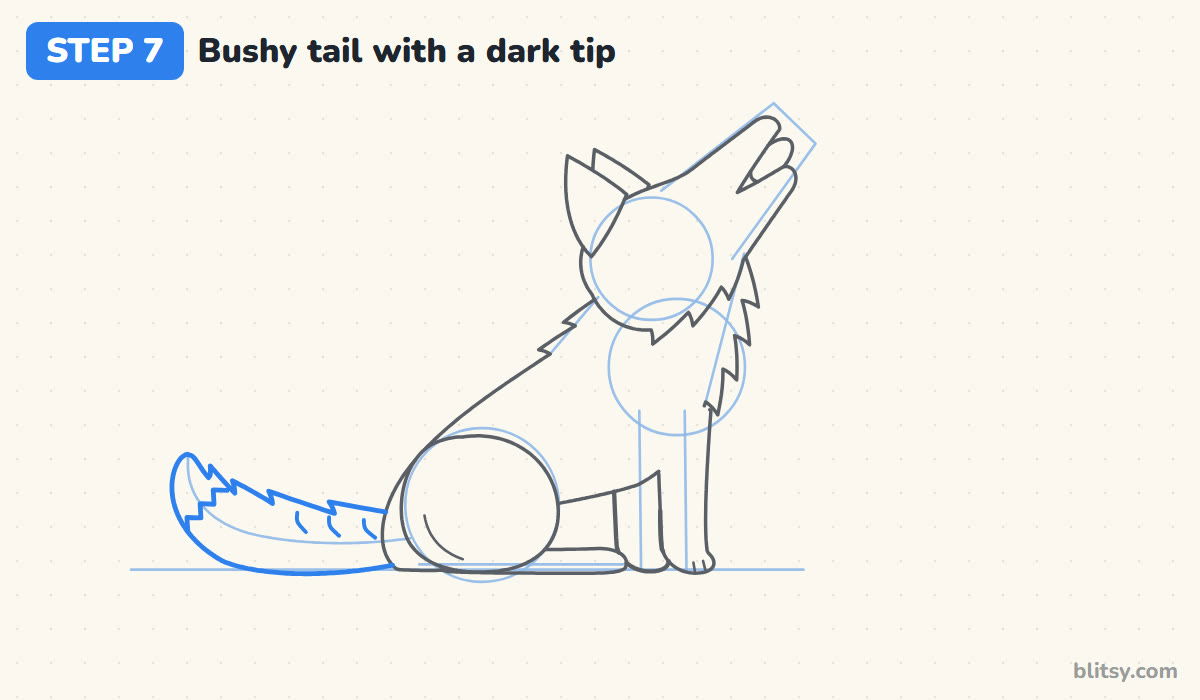
This tail rests on the rock and curls up at the end. Draw the bottom edge as a smooth curve along the rock and the top edge as a row of fur points. Near the curled end, zigzag a line across the tail to mark the dark tip, then add three tiny fur flicks along it.



💡 Tip: If the tail looks thin, widen the middle. A wolf tail is fattest halfway along.
Step 8: Draw the closed eye and nose
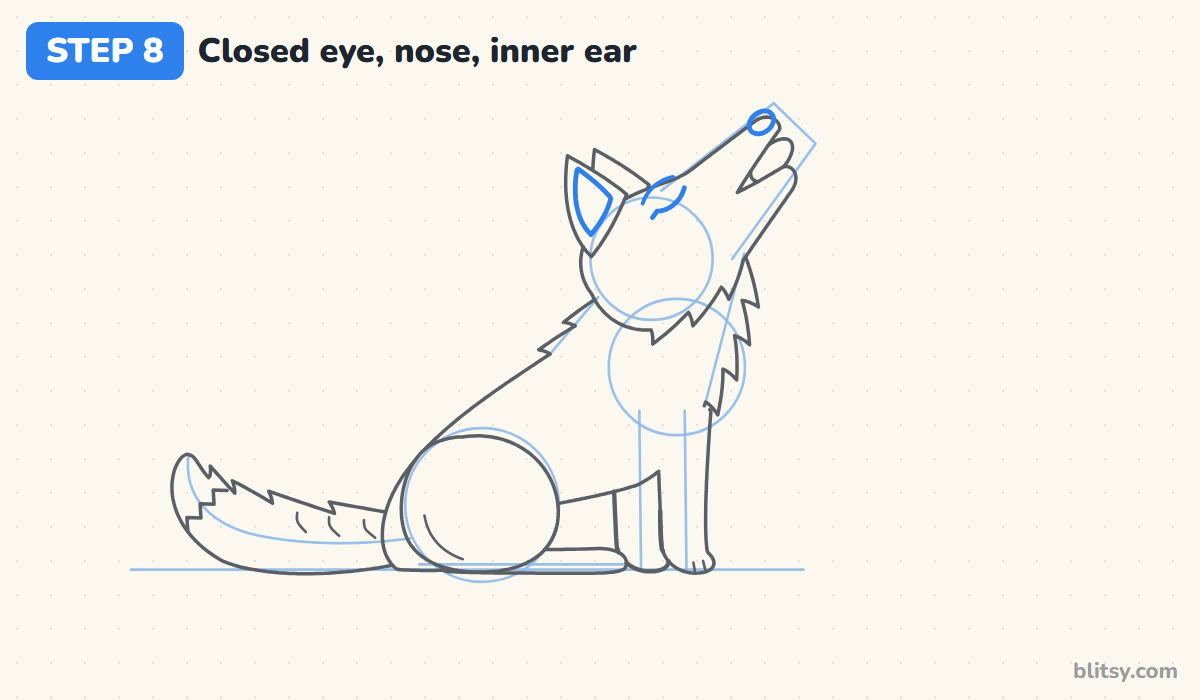
Because the wolf is howling, I close its eye. A short curve that dips down, with a tiny flick at the back, does the job, and a soft brow line goes just above it. Put an oval nose on the very tip of the upper jaw. Finish with a smaller pointed shape inside the near ear.
💡 Tip: Place the eye where the muzzle meets the skull, not in the middle of the head.
Step 9: Mark the cream and dark fur
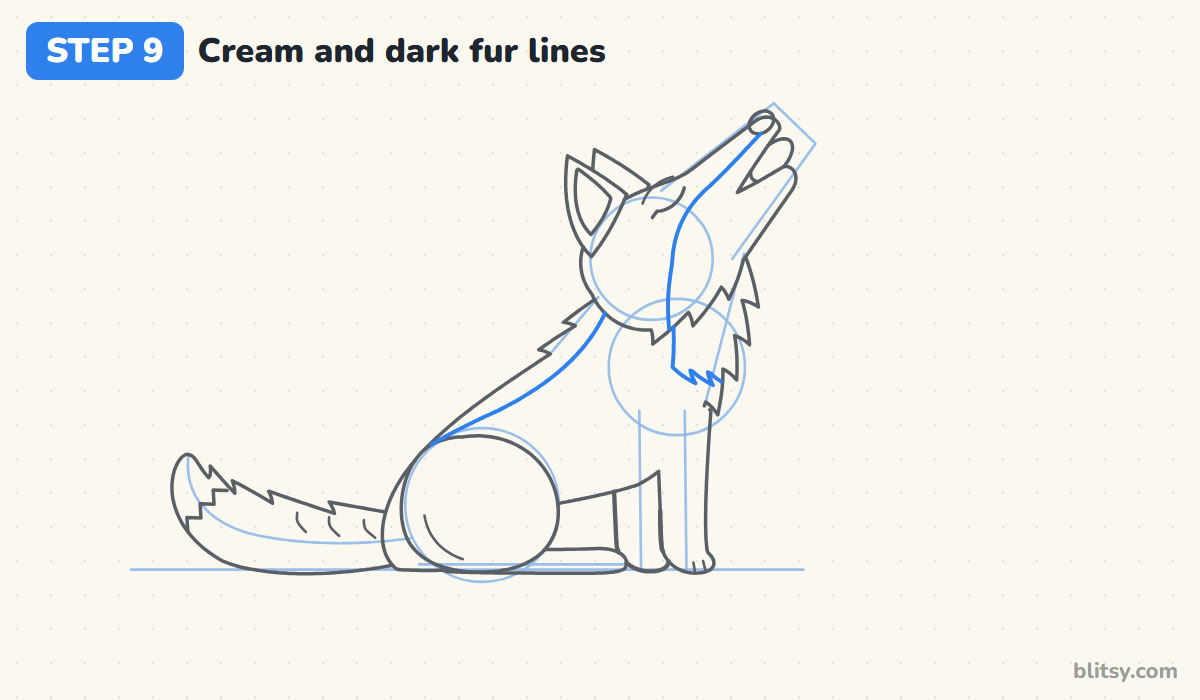
Gray wolves are lighter underneath. Run a line from the nose along the side of the muzzle, under the eye and down the neck to show where the cream fur starts. On the chest, end that cream bib with a few small zigzags. Then draw a long curve just inside the back line for the darker saddle fur.
💡 Tip: Keep the saddle line close to the back. A wide stripe looks like a coat.
Step 10: Add the rock and a full moon
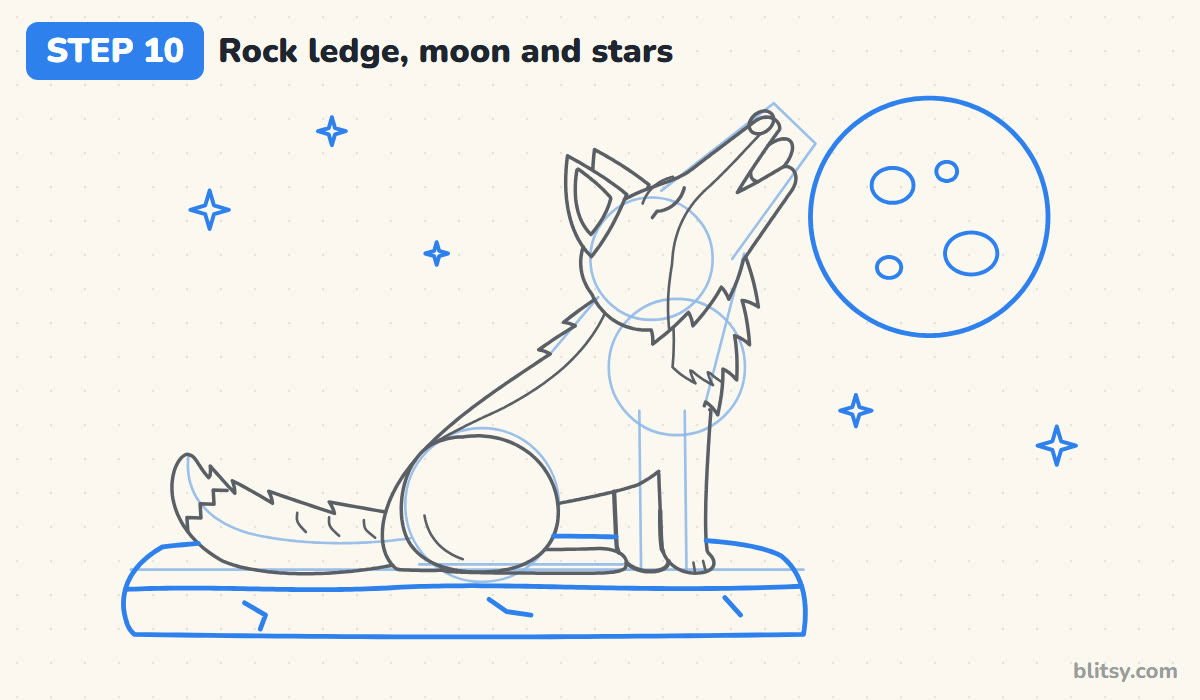
Draw the rock as a long slab with rounded corners, then a wavy line across it to split the top from the front face, and a few short cracks. On the right, draw a big circle for the full moon with four craters. Scatter a handful of small four-pointed stars in the empty spaces.
💡 Tip: Trace something round, like a cup or tape roll, if your moon circle keeps wobbling.
Step 11: Ink the lines and erase the guides
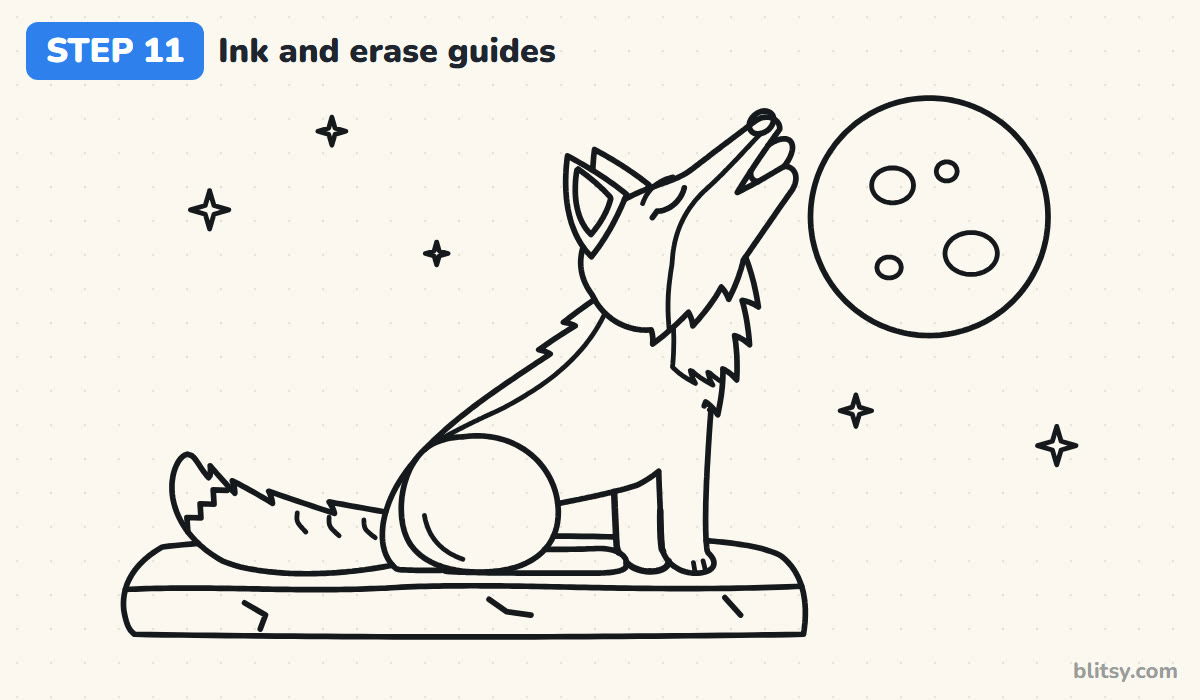
Go over every keeper line with the black fineliner. I ink the head and ruff first, since that's where the detail is, and work down toward the tail and rock. Skip the circles, the muzzle box and the stick lines. Once the ink is dry, erase the pencil.




💡 Tip: Draw each zigzag tuft in two quick strokes. Slow, shaky tufts look nervous.
Step 12: Color your howling wolf
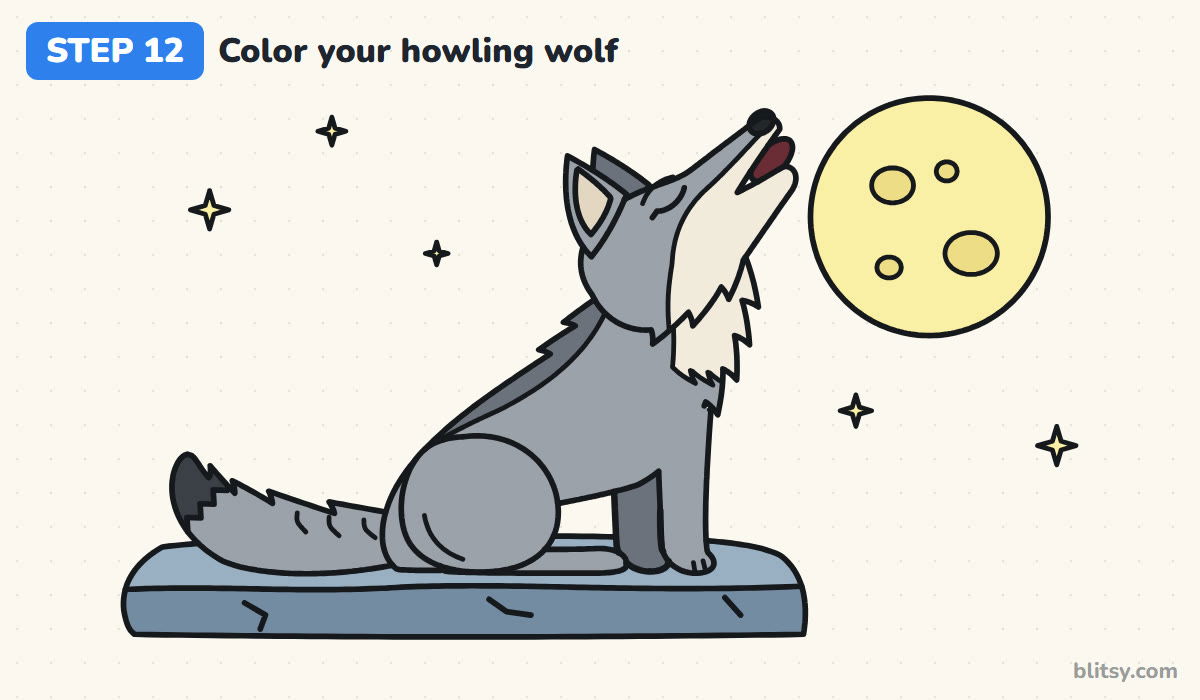
Color the whole wolf medium gray first. Use dark gray for the saddle on the back, the far leg and the far ear, and black for the nose and tail tip. Keep the muzzle and throat cream, along with the chest bib. Give the open mouth dark red, the moon and stars pale yellow, and the rock blue gray with a darker front face.
💡 Tip: Color the moon before the wolf so yellow never smudges into the gray fur.
Where a Wolf Sketch Slips into Dog Territory
- A short, round muzzle. Wolves have long snouts. Use the muzzle box and make it clearly longer than the head circle is wide.
- A smooth neck. The zigzag ruff is the strongest wolf signal you have. Leave it out and the drawing turns into a pet.
- A thin tail. Make it bushy with fur points along the top and a dark tip, not a rope.
- The head pointing straight ahead. For a howl, tip the muzzle well up toward the sky, around 45 degrees, and close the eye.
- One flat gray everywhere. Add the cream underside and the darker back, or the wolf looks like a plastic toy.
Other Wolves to Try with the Same Circles
Once the howling pose feels easy, change the coat. Color it pure white for an arctic wolf, warm reddish brown for a red wolf, or nearly black with gold eyes open for a dramatic night scene. If the moon is the part you enjoyed most, the moon drawing tutorial shows a sleepy crescent and a row of real moon phases, and wolf fans often like this arctic fox drawing step by step lesson too.
Free Howling Wolf Coloring Page and PDF Guide
The wolf coloring page shows a colored example at the top with a key that matches each color to a part of the picture, and a large outline underneath with room to add trees or more stars. The step-by-step PDF guide holds all 12 steps with their pictures and tips. Both print on Letter or A4 paper.
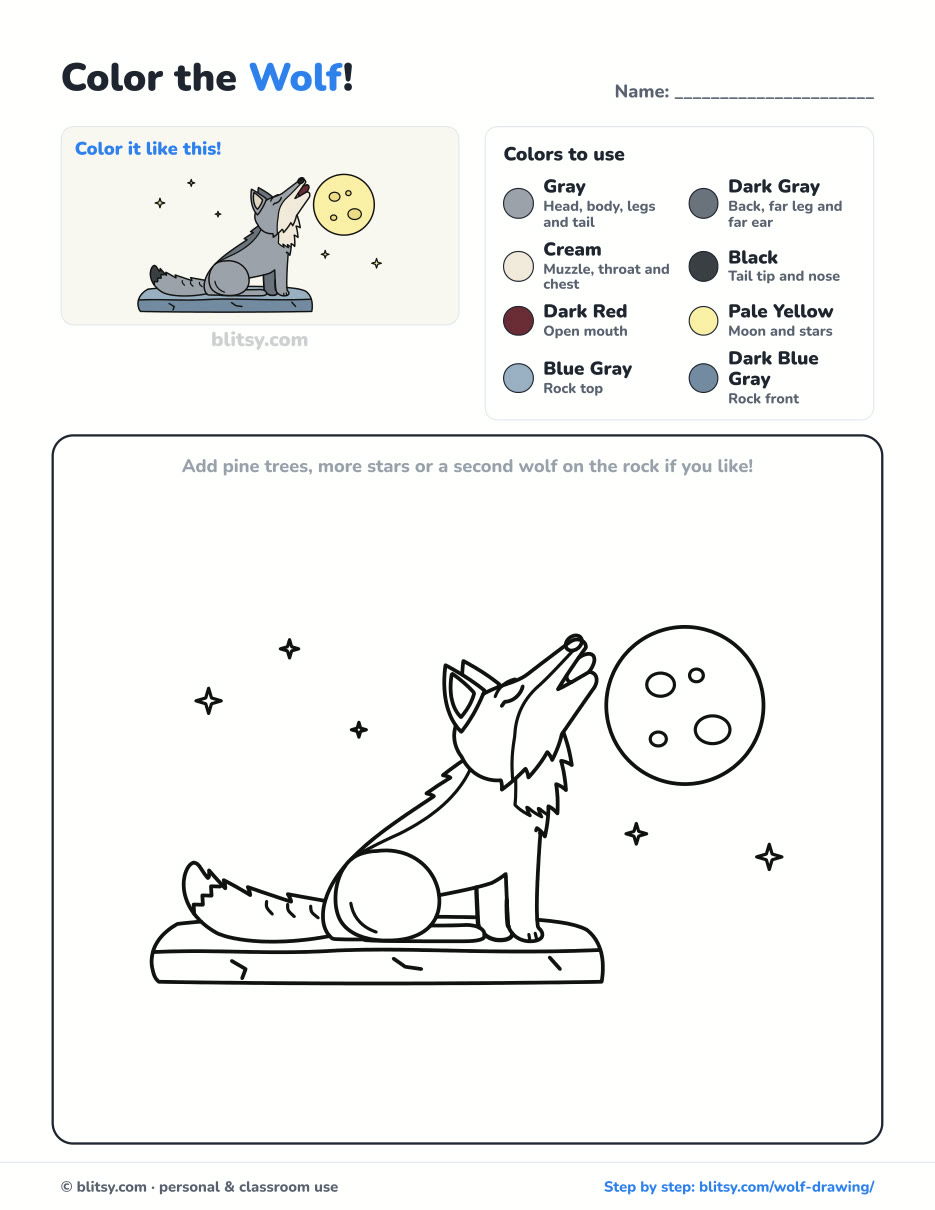
Black outlines with a colored example and the color names at the top. Ready to print and color.
⬇️ Download Coloring PageEvery step picture with its instructions and tips, to keep beside your paper while you draw.
⬇️ Download Drawing Guide📱 On a phone? Tap a download button, then open the file and choose Share → Save to Files or Print. On a computer, the PDF opens or saves straight to your Downloads folder.
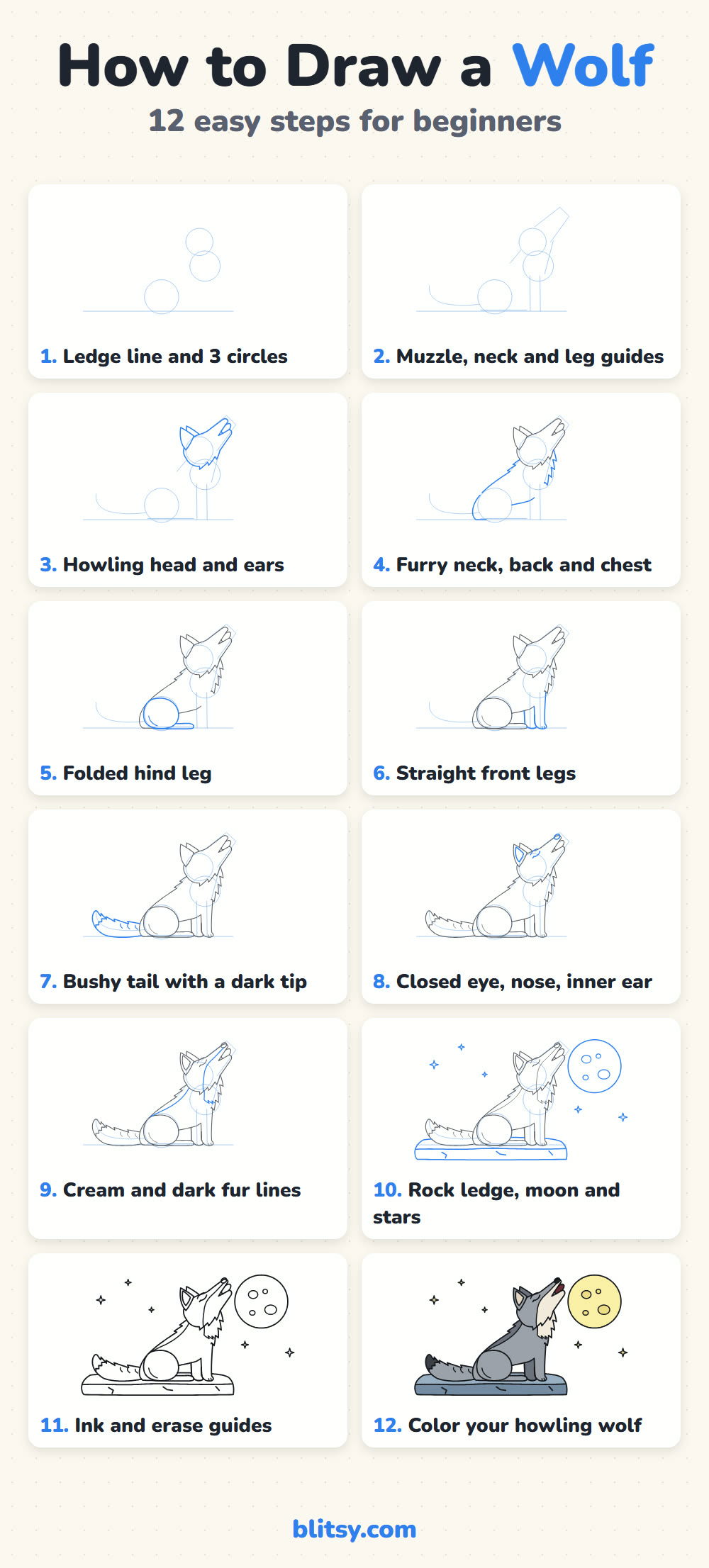
A Tall Wolf Cheat Sheet for Pinterest
Wolf Drawing Questions I Get Asked
What is the easiest way to draw a wolf?
Build it from three circles, one each for the hip, the chest and the head, plus a long box for the muzzle. Drawing your outline around those shapes is much easier than starting with the outline.
Do wolves really howl at the moon?
No. Wolves howl to keep in touch with their pack and to tell other wolves where they are. They raise their heads because the sound carries farther that way, and night is simply when they're most active.
How do you make a wolf drawing look different from a dog?
Give it a longer muzzle, a thick zigzag ruff on the neck, a bushy tail with a dark tip, and a darker gray back over a cream belly.
Is this wolf drawing good for kids?
Yes, for kids around 8 and up. Younger children can skip the fur tufts and the cream markings and still end up with a clear howling wolf.
Find a quiet spot, tip that muzzle toward your moon and let your wolf sing. 🐺🌕
Related posts:
 How to Draw a Moon Step by Step (Sleepy Crescent + Phases)
 How to Draw a Whale Step by Step (Easy for Beginners)
 How to Draw Lungs Step by Step (Easy Science Diagram)
 How to Draw a Pineapple Step by Step (Easy Crown and Slice)
 How to Draw Iron Man Step by Step (Easy Chibi for Kids)
 How to Draw a Dress Step by Step (Easy Party Dress)
 How to Draw a Chicken Step by Step (Easy for Beginners)
 How to Draw a UFO Step by Step (Cute Alien Saucer)
 How to Draw Flames Step by Step (Easy Campfire Drawing)
 How to Draw a Jellyfish Step by Step (Cute, Easy Guide)
 How to Draw Cerberus Step by Step (Cute and Easy)
 How to Draw a Taco Step by Step (Easy Kawaii Taco)

